


Ramaphosa Praises Putin After 17 South Africans Brought Home from Russia-Ukraine Front Line
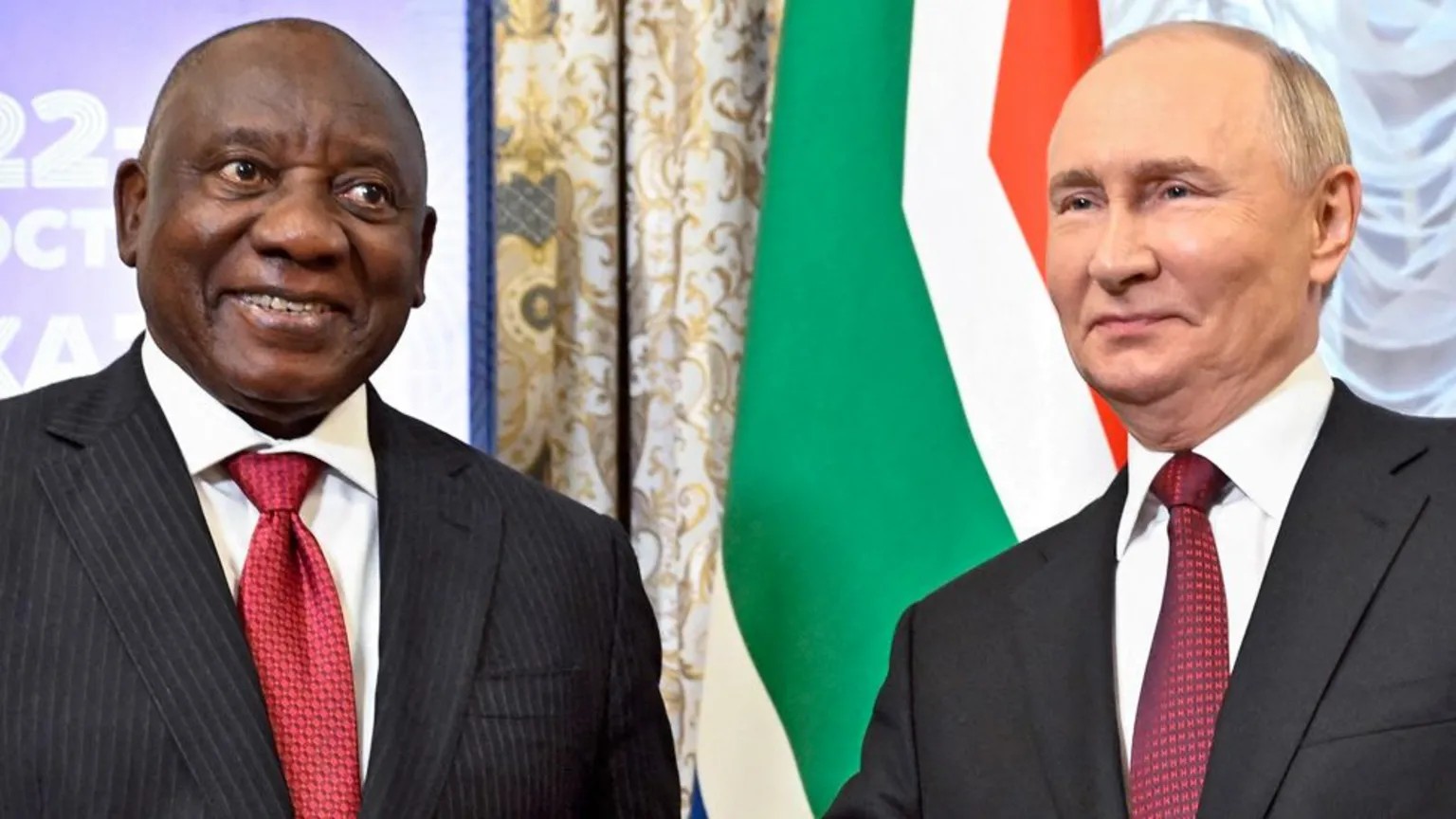
President Cyril Ramaphosa has publicly thanked Russian President Vladimir Putin for facilitating the return of 17 South African nationals who say they were tricked into fighting on the front lines of the Russia–Ukraine war.
The South African Presidency said four of the men arrived back in the country last Friday, with 11 more “on their way home soon” and two to follow at a later stage. Two of the group remain in Russia — one hospitalized in Moscow and the other undergoing travel processing — and the South African embassy in Moscow is monitoring their cases, the presidency said.
Ramaphosa raised the matter directly with President Putin on February 10. “President Ramaphosa has expressed his heartfelt gratitude to President Vladimir Putin who responded positively to his call to support the process of returning the men home,” presidential spokesperson Vincent Magwenya said in a statement Tuesday.
The men say they were lured to Russia last year on the pretext of receiving bodyguard or security training. Once there, relatives and the recruits themselves allege they were presented with contracts in Russian and then deployed to fight as mercenaries against Ukrainian forces. South African law outlaws serving as a mercenary or fighting on behalf of a foreign power unless expressly authorised by the state.
Relatives who spoke to international media described desperate distress calls received by South African officials in November, prompting the government to begin diplomatic engagement. The presidency confirmed an investigation into the recruitment and travel arrangements is ongoing.
The returned men face a fraught legal and social landscape at home. Authorities have not publicly detailed whether any of the recruits will face criminal charges; working as an unauthorised mercenary can carry legal consequences under South African law. South African police have launched inquiries and several related legal actions are underway.
High-profile names have surfaced in connection with the alleged recruitment ring. Duduzile Zuma-Sambudla, a daughter of former president Jacob Zuma and a one-time member of Parliament, has been accused by relatives and others of orchestrating the scheme. Zuma-Sambudla denies the allegations. She resigned her parliamentary seat amid the scandal in late November and has told police in an affidavit that she believed the men were travelling for legitimate training and “would not, under any circumstances, knowingly expose my own family or any other person to harm.”
Her half-sister, Nkosazana Zuma-Mncube, filed a criminal complaint in November accusing Zuma-Sambudla of deception in the recruitment. Separately, police arrested five people in December in relation to alleged recruitment for the Russian military, including a presenter from South Africa’s public broadcaster; those suspects were released on bail and their trial has not yet begun.
Diplomatic channels between Pretoria and Moscow have been thrust into the spotlight by the case. South Africa, which has maintained relatively warm ties with Russia, deployed consular resources after the distress calls and has been coordinating with Russian authorities to secure repatriation. Officials say the cooperation from Moscow was decisive in bringing the men home.
Human rights and veterans’ organisations warn of longer-term consequences for those returned from conflict zones — including potential PTSD, social stigma, and legal uncertainty — and have urged the government to provide counselling, medico-legal assessments and clear guidance on any criminal or administrative processes. South African authorities have not yet released details on reintegration or support plans for the returnees.
As investigations continue, questions remain over recruitment networks, the role of intermediaries, and whether other South Africans have been targeted. Prosecutors and police investigators face the task of unraveling cross-border contracts, travel documentation written in Russian, and the involvement of public figures and media personalities alleged to have promoted or facilitated the journeys.
The presidency said it would continue to work with Russian authorities until all citizens are safely returned and cleared to travel. For now, families of the men who have arrived home are regrouping, while public scrutiny and legal proceedings continue to unfold around one of the most politically sensitive recruitment scandals in South Africa in recent years.

0 Comment(s)